
LasseMajas Deckarhus
LasseMaja
Digital character interaction through animation and AI
my ROLE
UX and Motion Graphics
Timeline
2 months
2023
project TEAM
Fredrik Löfgren, Astrid Lauenstein
Overview
Interactive AI-powered exhibition in the style of LasseMaja
In 2023, i designed and animated the interface for the finale station for LasseMaja’s Detective House, a themed escaperoom-experience in Linköping, Sweden, in the style of the beloved swedish childrens books series: LasseMajas Detektivbyrå.
Visitors of the destination participate in the solving of a detective-mystery where they gather clues through different games and riddles. At the end of their visit they present their acquired evidence to the police officer of LasseMaja’s fictitious hometown through an animated video call with AI-driven speech recognition.
Overview
Interactive AI-powered exhibition in the style of LasseMaja
In 2023, i designed and animated the interface for the finale station for LasseMaja’s Detective House, a themed escaperoom-experience in Linköping, Sweden, in the style of the beloved swedish childrens books series: LasseMajas Detektivbyrå.
Visitors of the destination participate in the solving of a detective-mystery where they gather clues through different games and riddles. At the end of their visit they present their acquired evidence to the police officer of LasseMaja’s fictitious hometown through an animated video call with AI-driven speech recognition.

Context
The world of LasseMaja
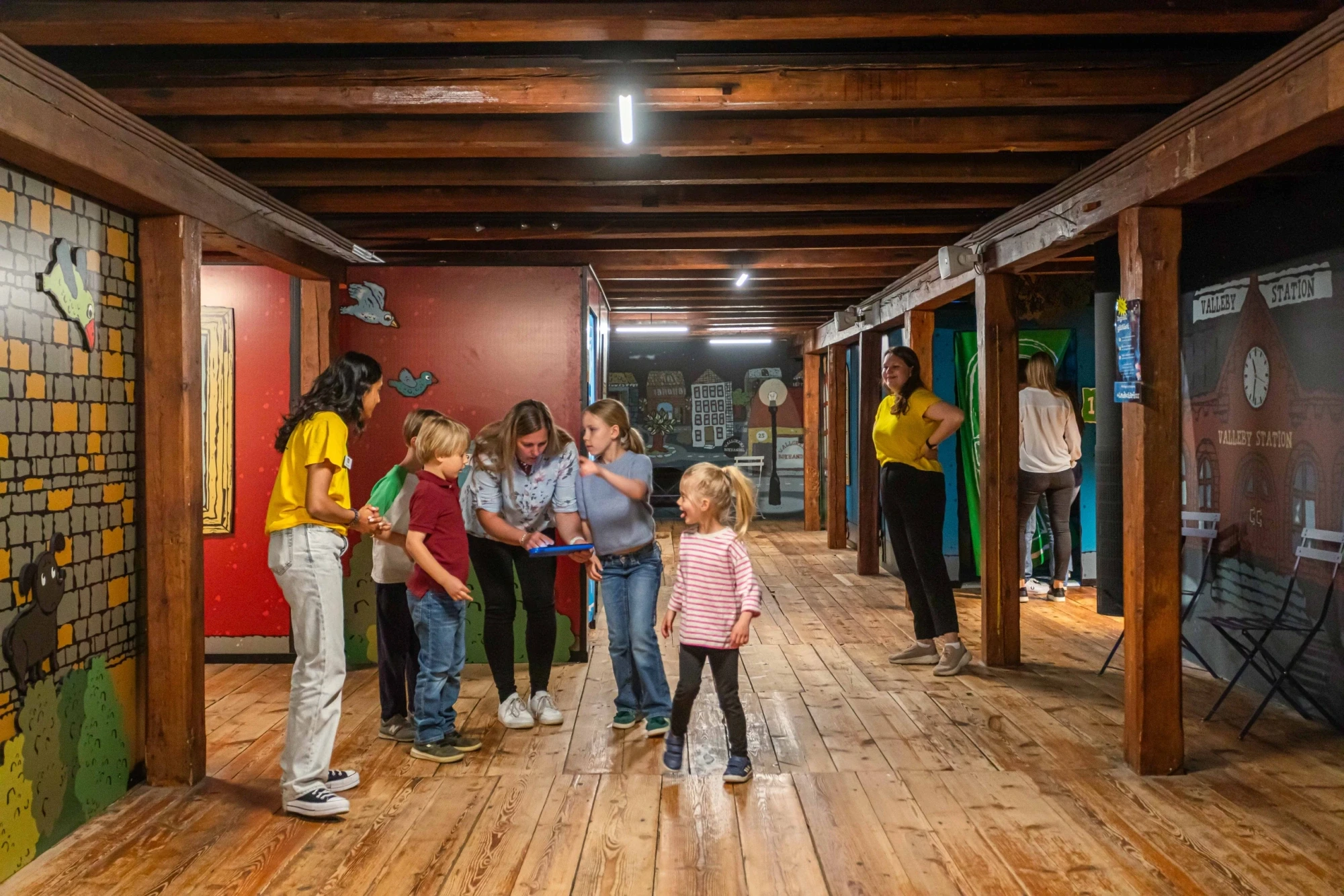
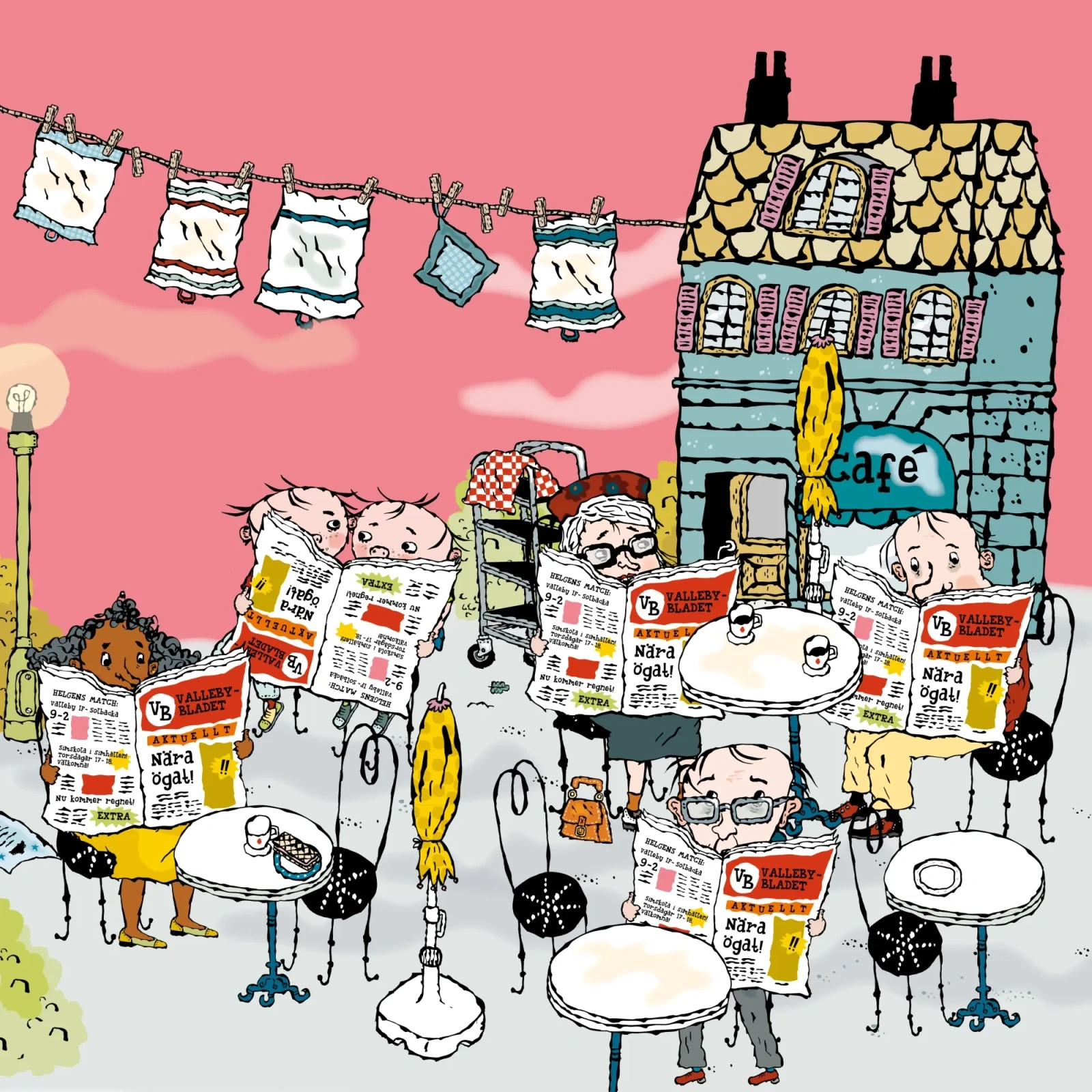
LasseMajas Deckarhus is filled with digiphysical experiences for the whole family. In groups of 2-5, visitors visit seven different interactive rooms guided by a tablet interface, to solve their mystery of choice. The whole space has been carefully designed to reflect Helena Willis' art style and is filled with references and characters from different parts of the book series. They're characterized by the squiggly outlines, distorted perspectives and a general 1950's environment.


Police Commissioner of Valleby
At the end of the mystery the group has to confirm their clues and suspect with the police commissioner of Valleby (the fictitious town the series is set in).
Task
Create an interactive digital embodiment of the police commissioner that fits the style of the environment
Context
The world of LasseMaja
LasseMajas Deckarhus is filled with digiphysical experiences for the whole family. In groups of 2-5, visitors visit seven different interactive rooms guided by a tablet interface, to solve their mystery of choice. The whole space has been carefully designed to reflect Helena Willis' art style and is filled with references and characters from different parts of the book series. They're characterized by the squiggly outlines, distorted perspectives and a general 1950's environment.
Police Commissioner of Valleby
At the end of the mystery the group has to confirm their clues and suspect with the police commissioner of Valleby (the fictitious town the series is set in).
Task
Create an interactive digital embodiment of the police commissioner that fits the style of the environment
The design
Bringing the commissioner to life
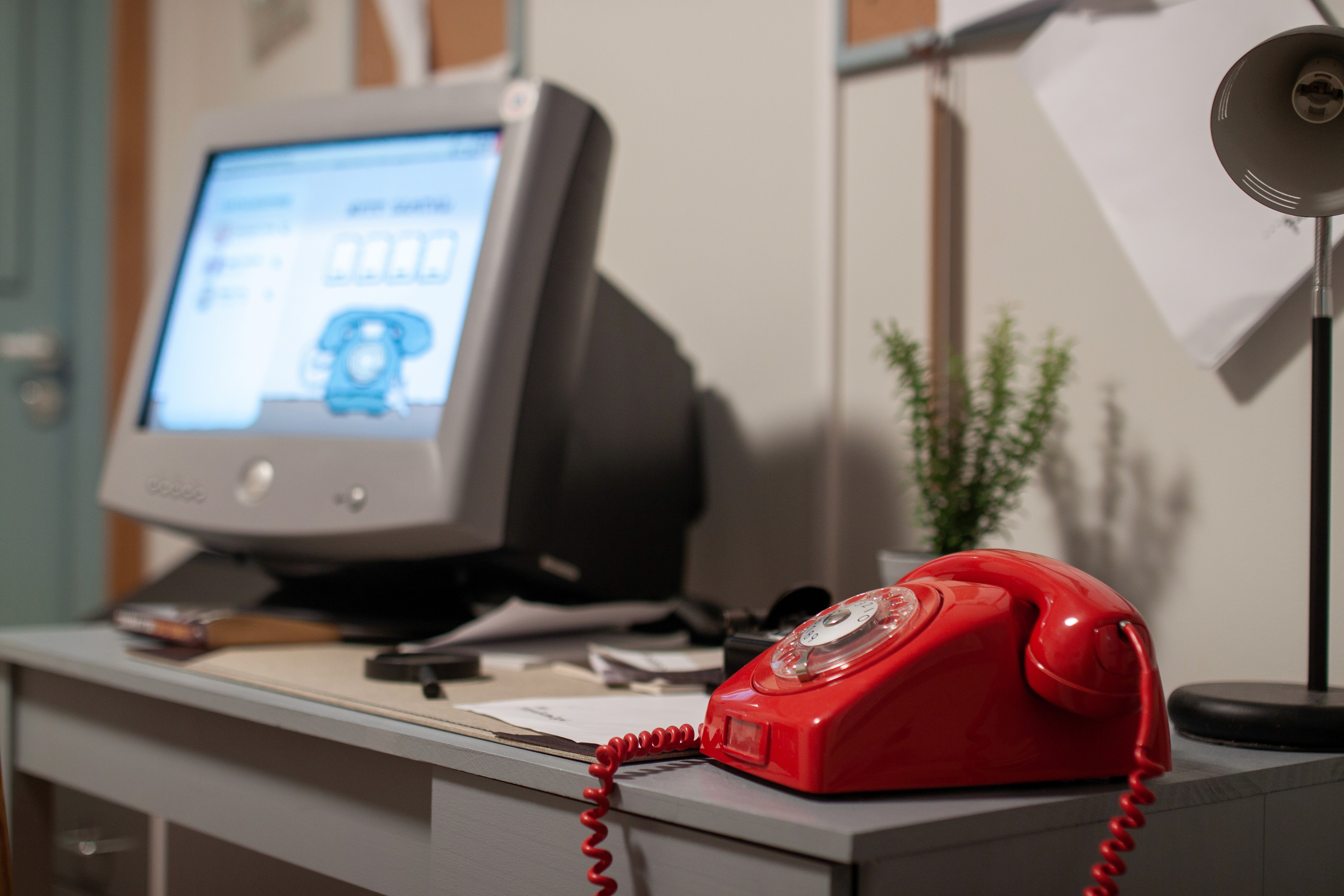
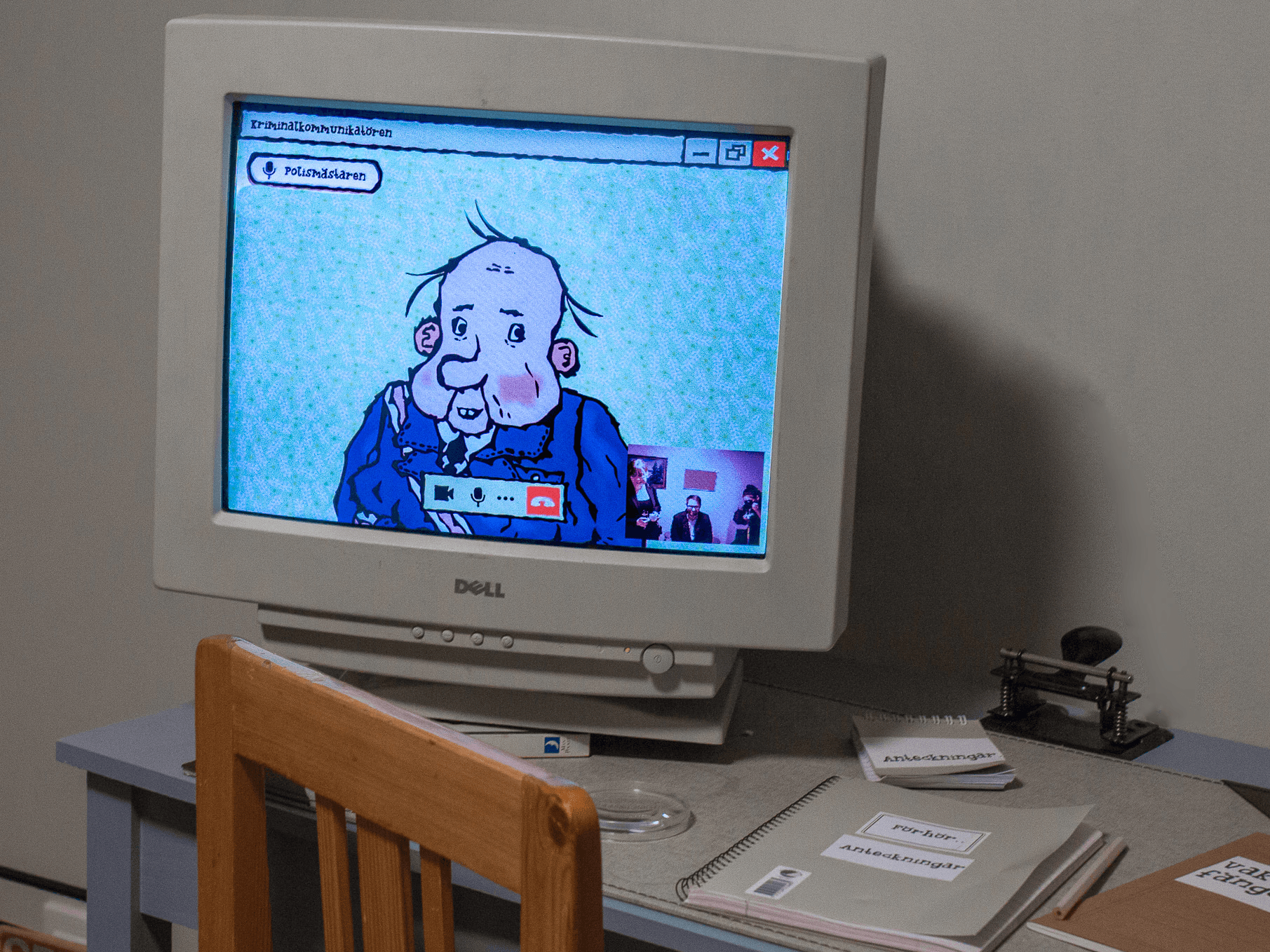
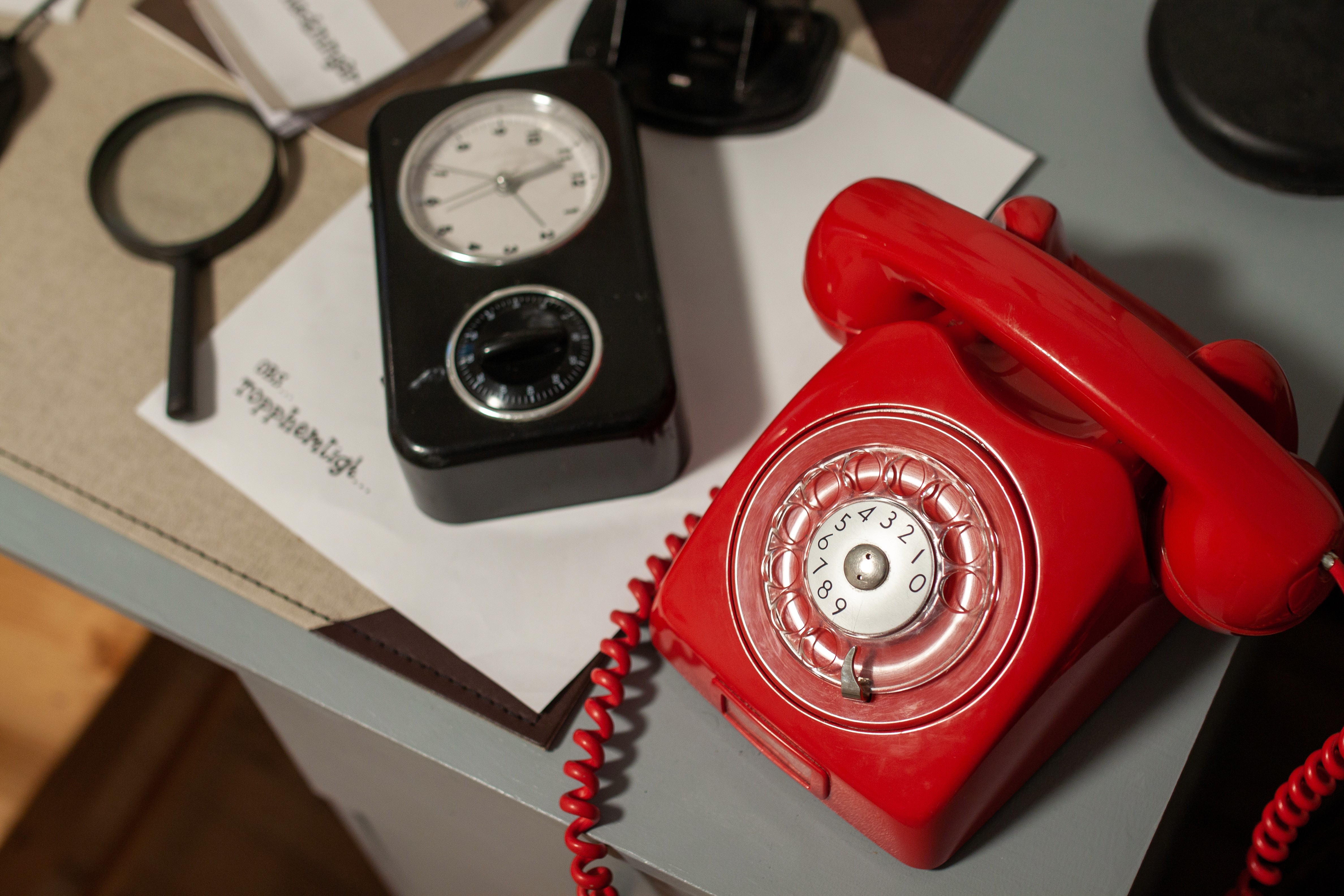
The final station of the experience was designed as a retro-styled video call with the police commissioner. To match the old-timey world of LasseMaja, the interface used a CRT screen to display a Teams-like call and a real rotary phone for both microphone input and entering the group’s code. Because many visitors had never used a rotary phone before, the landing screen introduced the interaction and explained how to use it. If an invalid number sequence was inputed, en error dialogue popped up.
Starting screen
A hidden PC under the table ran the interface, while a webcam connected to the screen displayed the visitors’ side of the call. This made the interaction feel closer to a real video conversation, while still fitting the playful tone of the exhibition.
Designing the interaction
The experience was designed to feel like a believable conversation rather than a traditional screen flow. After entering their code, visitors were connected to the commissioner through a short humorous intro sequence, where he initially forgets to turn on his microphone. From there, he asked questions about the clues and suspects the group had gathered during the experience.
Intro sequence
Instead of relying entirely on synthetic output, the commissioner’s voice was built from a large library of recorded audio lines by a voice actor in order preserve both character and humanity. Visually, the interface used a smaller set of reusable video states, including different response states and idle loops, which could be triggered depending on the interaction.
Examples of response states
The AI layer sat between the visitors’ spoken answers and the commissioner’s response. Speech from the rotary phone microphone was converted to text, interpreted by the system, and used to select the most appropriate audio and video sequence in response. This made it possible to create a conversational flow while keeping the commissioner’s voice and visual behavior consistent with the character.
Author and creator of LasseMaja series, Martin Widmark, using our interface
The ending
Once the visitors had solved the mystery, the experience ended with a photo moment. Using the webcam, the system captured the group and generated a front page of Vallebybladet with the visitors pictured alongside the criminal behind bars. This printout became a physical souvenir that visitors could take home, extending the experience beyond the exhibition itself.
Sequence during taken photo
The design
Bringing the commissioner to life
The final station of the experience was designed as a retro-styled video call with the police commissioner. To match the old-timey world of LasseMaja, the interface used a CRT screen to display a Teams-like call and a real rotary phone for both microphone input and entering the group’s code. Because many visitors had never used a rotary phone before, the landing screen introduced the interaction and explained how to use it. If an invalid number sequence was inputed, en error dialogue popped up.
Starting screen
A hidden PC under the table ran the interface, while a webcam connected to the screen displayed the visitors’ side of the call. This made the interaction feel closer to a real video conversation, while still fitting the playful tone of the exhibition.
Designing the interaction
The experience was designed to feel like a believable conversation rather than a traditional screen flow. After entering their code, visitors were connected to the commissioner through a short humorous intro sequence, where he initially forgets to turn on his microphone. From there, he asked questions about the clues and suspects the group had gathered during the experience.
Intro sequence
Instead of relying entirely on synthetic output, the commissioner’s voice was built from a large library of recorded audio lines by a voice actor in order preserve both character and humanity. Visually, the interface used a smaller set of reusable video states, including different response states and idle loops, which could be triggered depending on the interaction.
Examples of response states
The AI layer sat between the visitors’ spoken answers and the commissioner’s response. Speech from the rotary phone microphone was converted to text, interpreted by the system, and used to select the most appropriate audio and video sequence in response. This made it possible to create a conversational flow while keeping the commissioner’s voice and visual behavior consistent with the character.
Author and creator of LasseMaja series, Martin Widmark, using our interface
The ending
Once the visitors had solved the mystery, the experience ended with a photo moment. Using the webcam, the system captured the group and generated a front page of Vallebybladet with the visitors pictured alongside the criminal behind bars. This printout became a physical souvenir that visitors could take home, extending the experience beyond the exhibition itself.
Sequence during taken photo
Outcome
Delivered system
The final result was an interactive AI-powered exhibition element that has been in use for several years as part of the LasseMajas Detective House experience. By translating the police commissioner into a digital character, the project helped extend the story world into the final stage of the visitor journey, showing how interface design, animation, and conversational interaction can work together to create a character-driven experience in a physical space.
Outcome
Delivered system
The final result was an interactive AI-powered exhibition element that has been in use for several years as part of the LasseMajas Detective House experience. By translating the police commissioner into a digital character, the project helped extend the story world into the final stage of the visitor journey, showing how interface design, animation, and conversational interaction can work together to create a character-driven experience in a physical space.
Previous project
Other projects
Next project