
Swedish Space Corporation
Life Support Box
Compact box for sustaining life science experiments during spaceflight
my ROLE
UX Design Lead, Fascilitator & CAD
Timeline
5 months
2024
project TEAM
Ashkan Okhovvatian, Julia Stålberg, Gabriel Larsson
Overview
Sustaining life science experiments aboard suborbital rockets
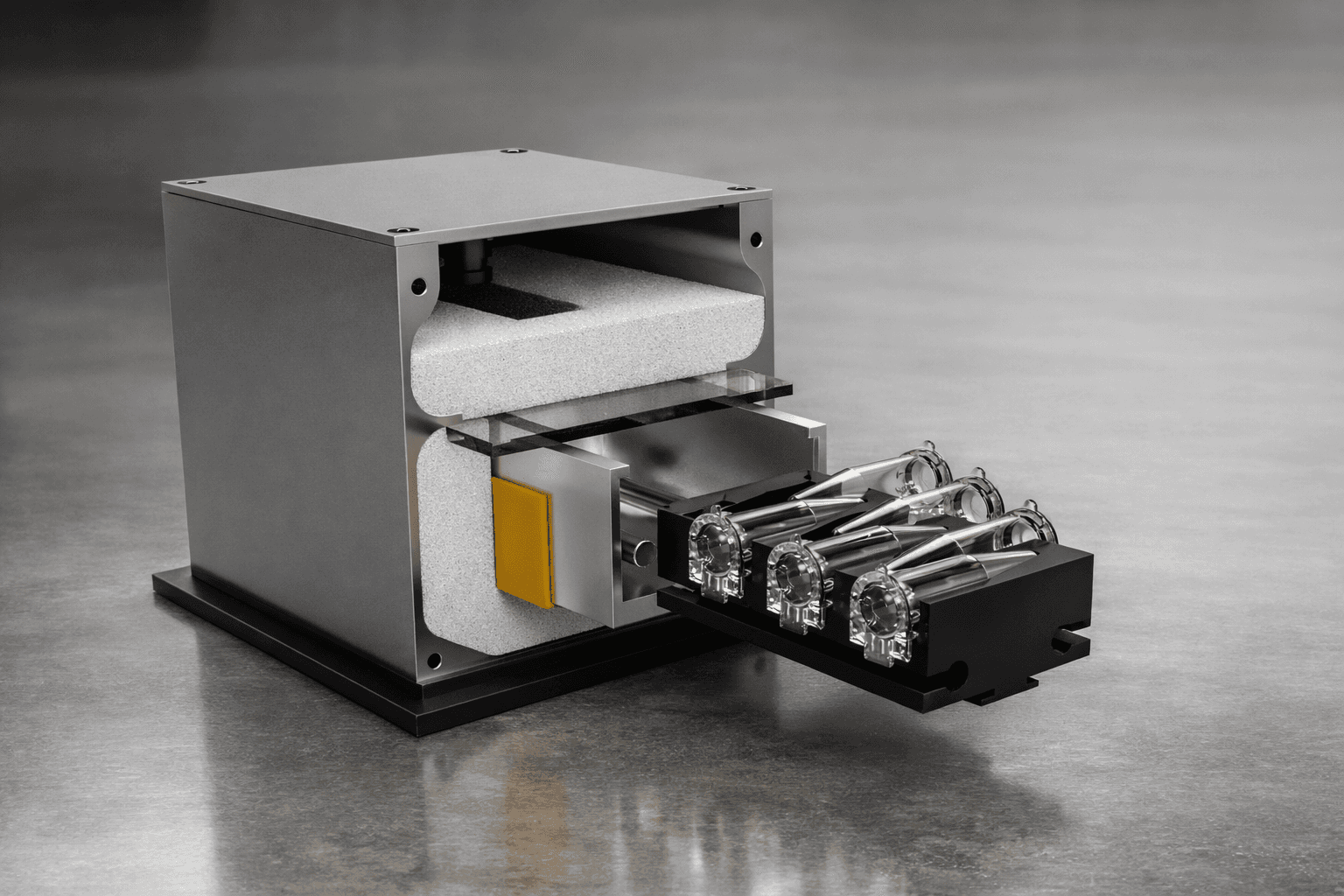
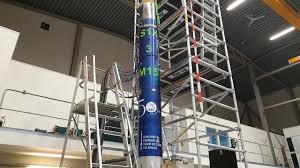
Tasked by SSC, we designed a Life Support Box for microgravital life science experiments aboard SSC’s SubOrbital Express rocket. My contributions focused on design engineering, concept development, and prototyping, addressing strict aerospace requirements in mechanics, thermodynamics, and usability.
Overview
Sustaining life science experiments aboard suborbital rockets
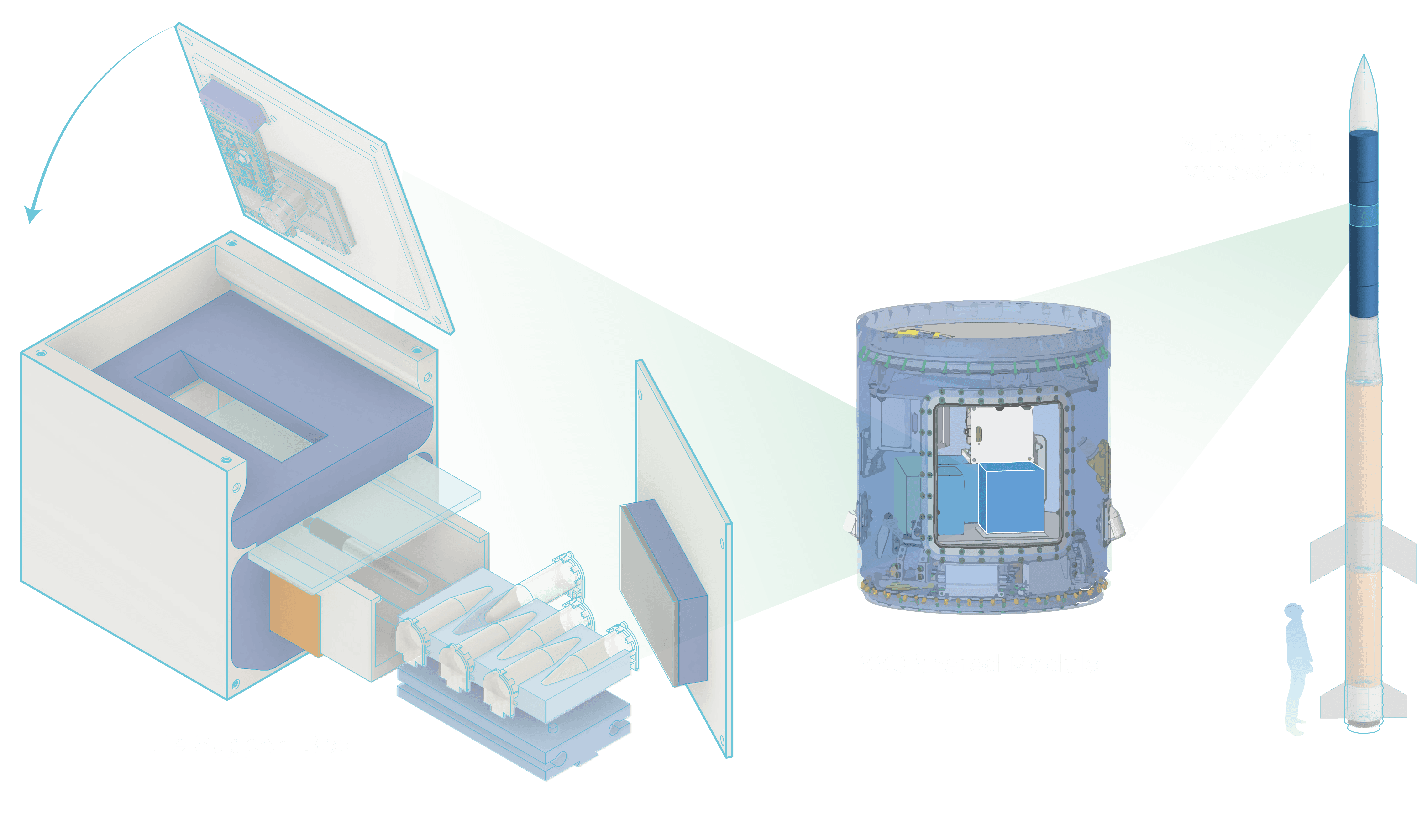
Tasked by SSC, we designed a Life Support Box for microgravital life science experiments aboard SSC’s SubOrbital Express rocket. My contributions focused on design engineering, concept development, and prototyping, addressing strict aerospace requirements in mechanics, thermodynamics, and usability.
The problem
Access to microgravital experiments
Microgravity research allows scientists to study how biological samples behave in conditions that cannot be reproduced in the same way on Earth. With the SubOrbital Express, the Swedish Space Corporation aims to make it more accessible for researchers to conduct their microgravital experiments. In a shared rocket module, researchers can buy a small space aboard a sounding rocket, and expose their experiments to 6 full minutes of microgravity, collect data and retrieve their vials after impact.
But, space experiments are still difficult to realize: they have to fit strict size, weight, sterility, imaging, sensing, and temperature requirements, and they often require specialized engineering support and substantial funding.
Key problems
Each experiment requires uniquely engineered container
The experiments have very limited space (10x10x10cm)
The researchers have to balance strict mechanical requirements with experimental security
The challenge
How can we design a multi-use 10x10x10 cm box capable of sustaining biochemical samples in microgravity, while being easy for a researcher without engineering knowledge to assemble?
The problem
Access to microgravital experiments
Microgravity research allows scientists to study how biological samples behave in conditions that cannot be reproduced in the same way on Earth. With the SubOrbital Express, the Swedish Space Corporation aims to make it more accessible for researchers to conduct their microgravital experiments. In a shared rocket module, researchers can buy a small space aboard a sounding rocket, and expose their experiments to 6 full minutes of microgravity, collect data and retrieve their vials after impact.
But, space experiments are still difficult to realize: they have to fit strict size, weight, sterility, imaging, sensing, and temperature requirements, and they often require specialized engineering support and substantial funding.
Key problems
Each experiment requires uniquely engineered container
The experiments have very limited space (10x10x10cm)
The researchers have to balance strict mechanical requirements with experimental security
The challenge
How can we design a multi-use 10x10x10 cm box capable of sustaining biochemical samples in microgravity, while being easy for a researcher without engineering knowledge to assemble?
Requirements
Aerospace conditions are strict
The challenge had to be tackled from a wide range of perspectives, from thermodynamics to usability. Beside the wider goals, the basic functionality of the product first had to be established.
Functions overview
The box needs to keep vials stable and in place during rough take off and impact
Throughout the experiment, vials need to be visible enough to be captured through video
Life science experiments rely on stable and sufficient temperature (around 37°C), and must be controllable before and during flight
The box needs to house equipment for measuring: temperature near vials, acceleration and pressure
Main objectives
0
1
Usability
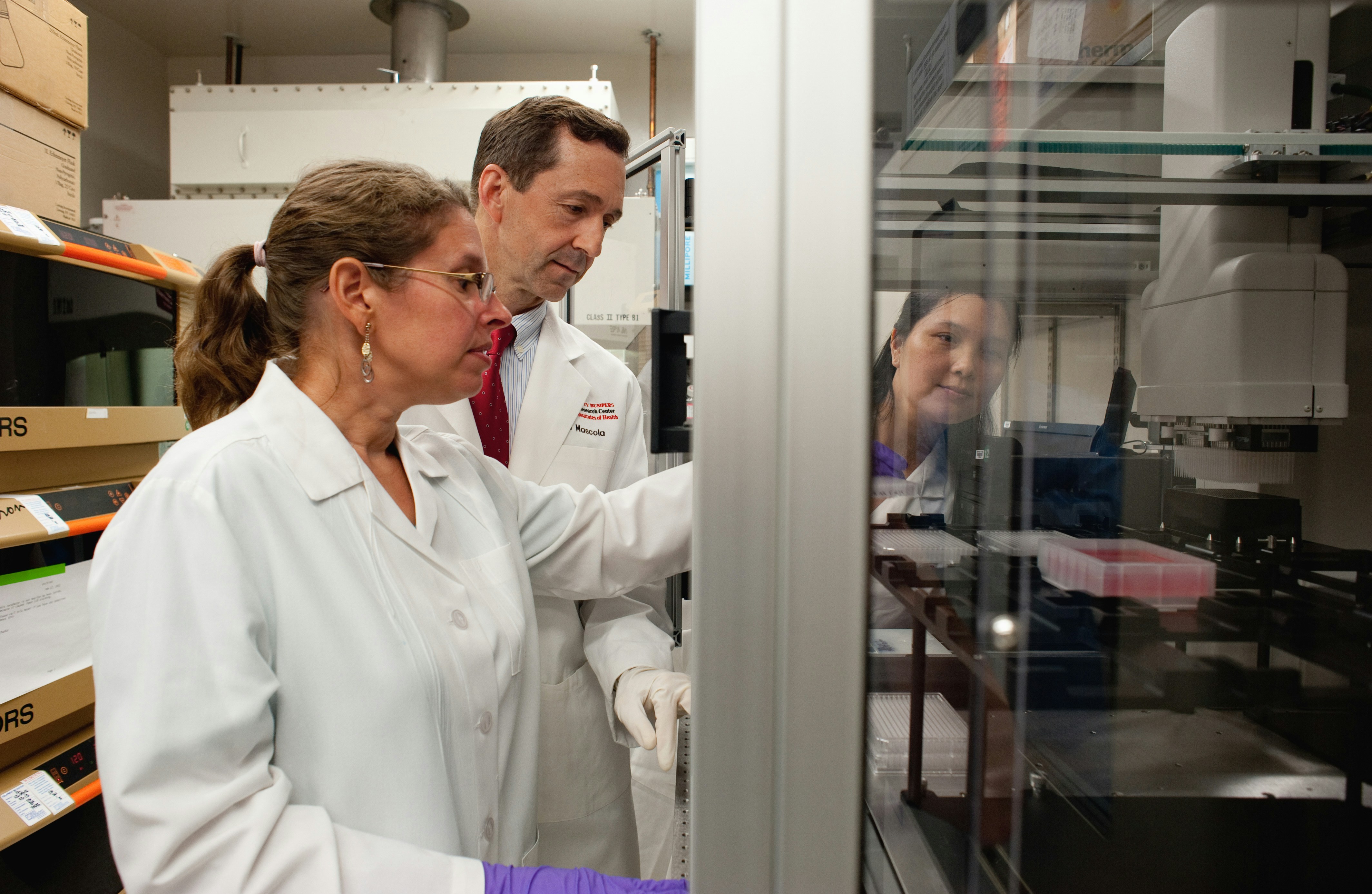
The vials need to be easy for scientists without engineering knowledge to assemble.
0
2
Risk management
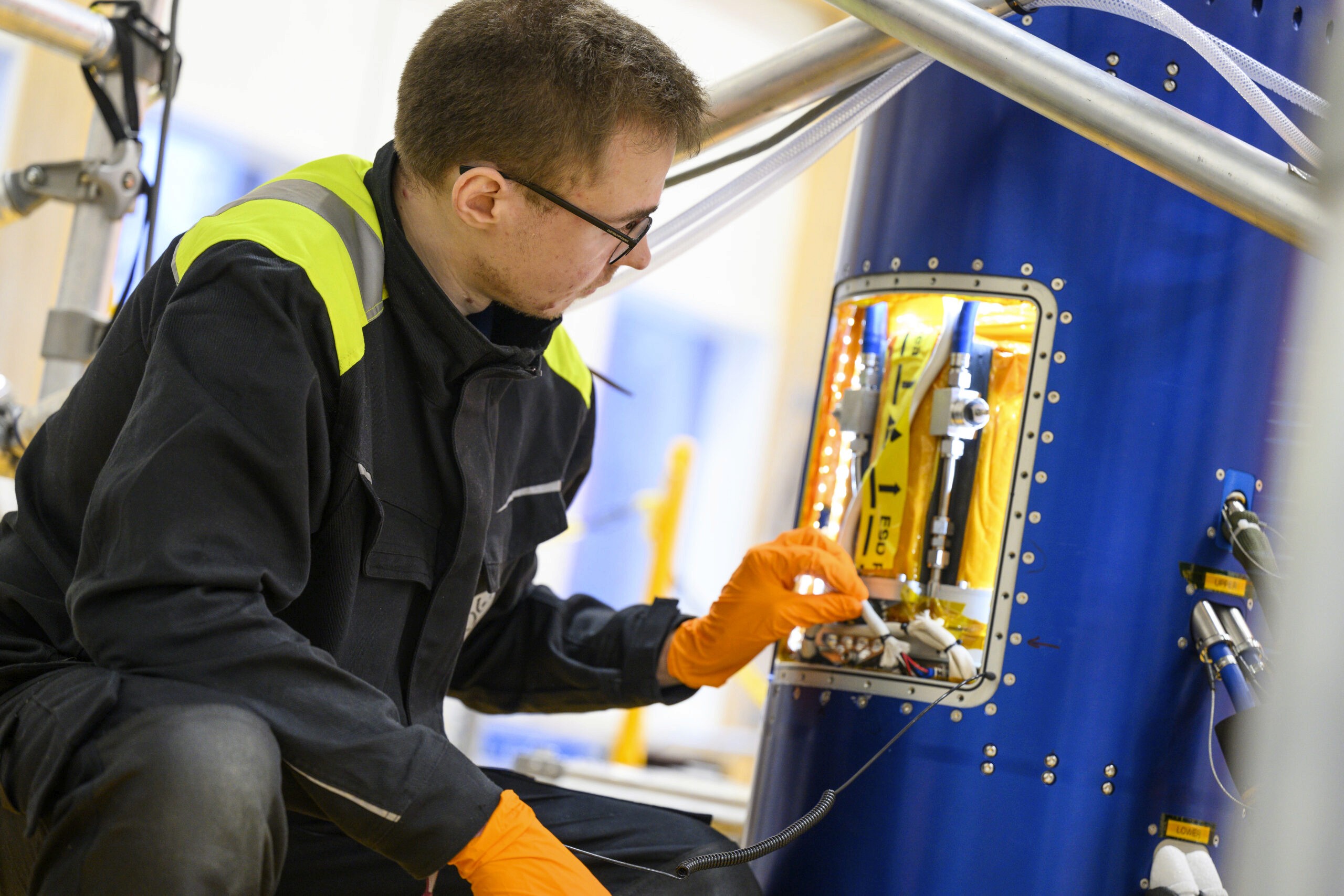
The box needs to operate without risk for loss of data, failed vials or or affecting other vials in the shared module.

0
3
Flexibility
The design needs to accomodate flexibility and reusability for a variety of life science applications using easily available materials.
0
4
Power reliance
The vials need to survive a 30 minute power outage before launch.
Requirements
Aerospace conditions are strict
The challenge had to be tackled from a wide range of perspectives, from thermodynamics to usability. Beside the wider goals, the basic functionality of the product first had to be established.
Functions overview
The box needs to keep vials stable and in place during rough take off and impact
Throughout the experiment, vials need to be visible enough to be captured through video
Life science experiments rely on stable and sufficient temperature (around 37°C), and must be controllable before and during flight
The box needs to house equipment for measuring: temperature near vials, acceleration and pressure
Main objectives
0
1
Usability
The vials need to be easy for scientists without engineering knowledge to assemble.
0
2
Risk management
The box needs to operate without risk for loss of data, failed vials or or affecting other vials in the shared module.
0
3
Flexibility
The design needs to accomodate flexibility and reusability for a variety of life science applications using easily available materials.
0
4
Power reliance
The vials need to survive a 30 minute power outage before launch.
Design process
Quick cycles of iteration
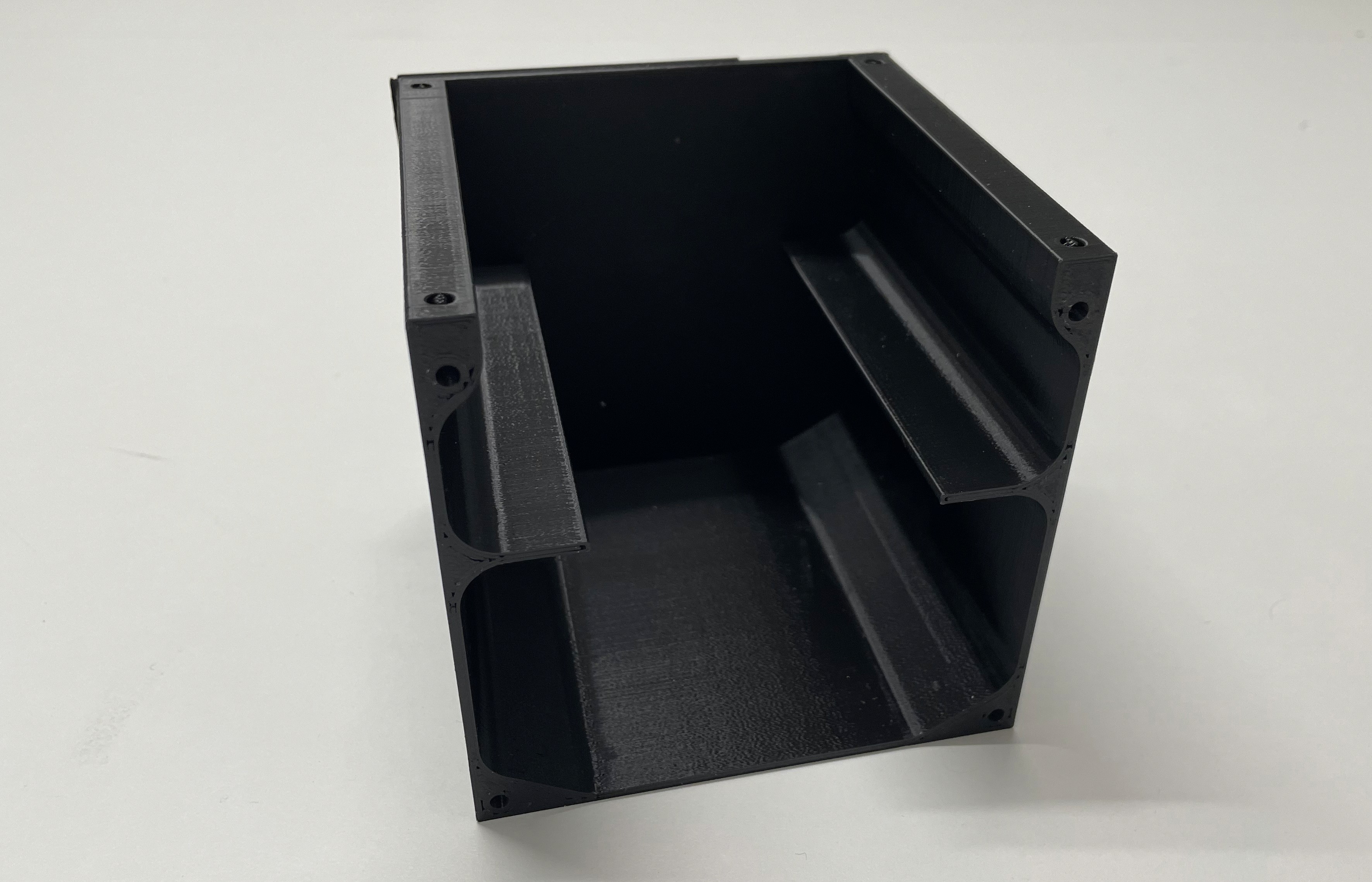
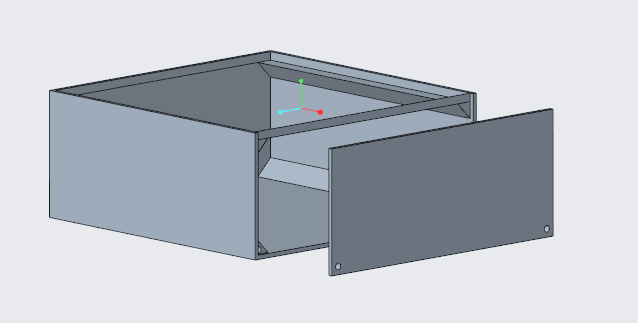
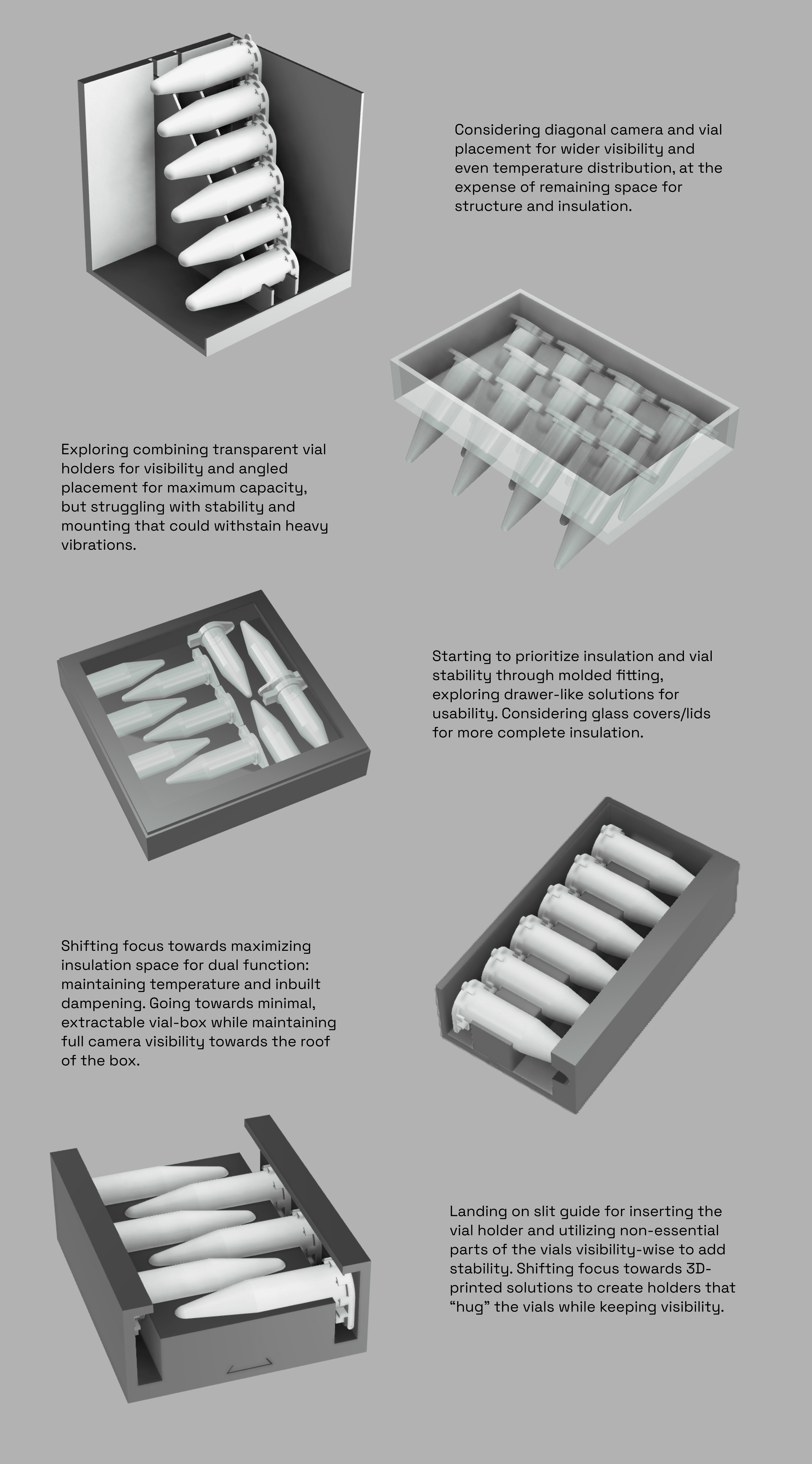
The set requirements were handled with an iterative design process, using rapid physical prototyping, exploring different solutions in fast cycles of evaluation and reiteration. I led initial ideation workshops, developed CAD visualizations, as well as lead the work towards interagrating the usability along with the technical requirements from the start.
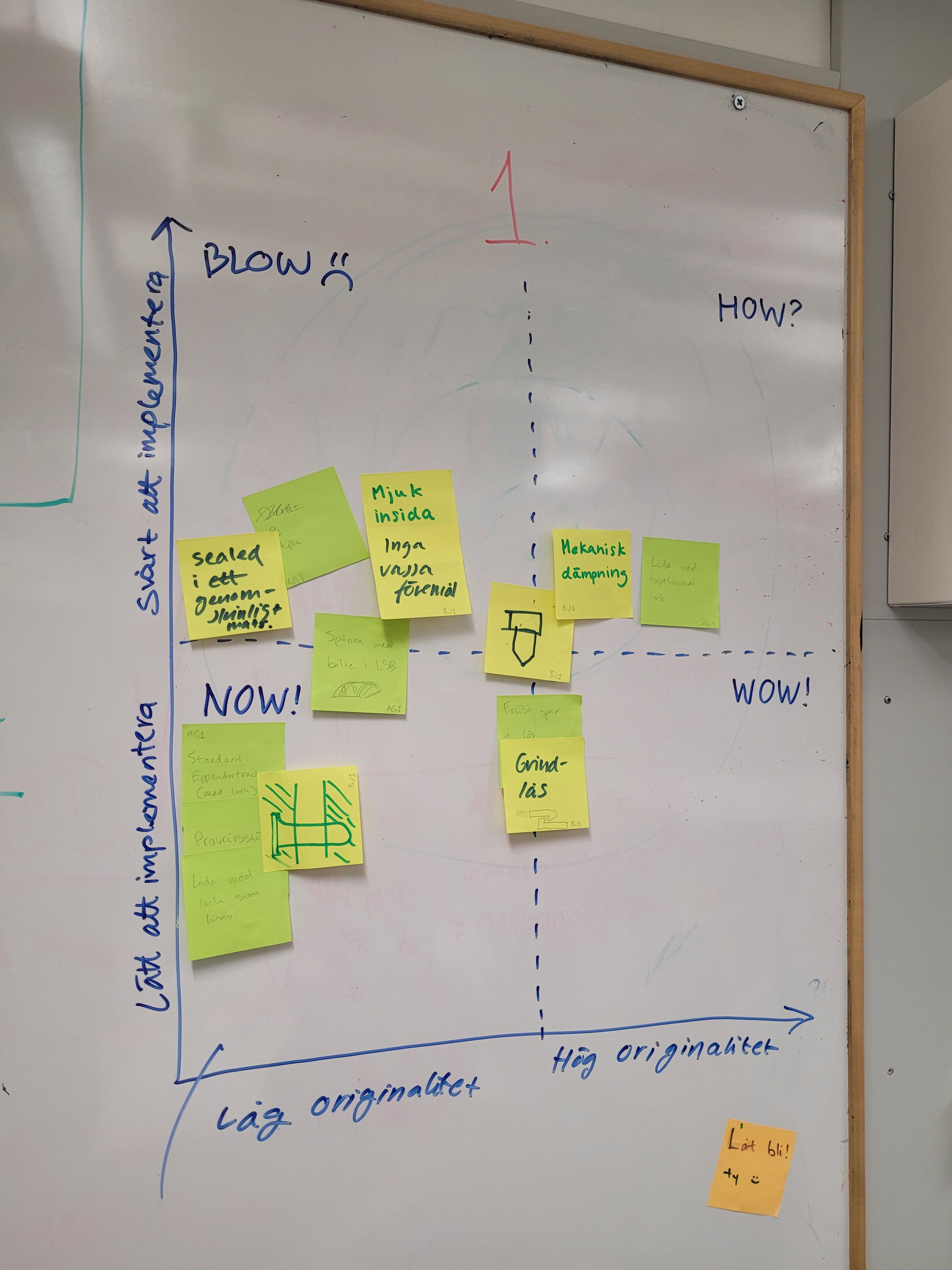
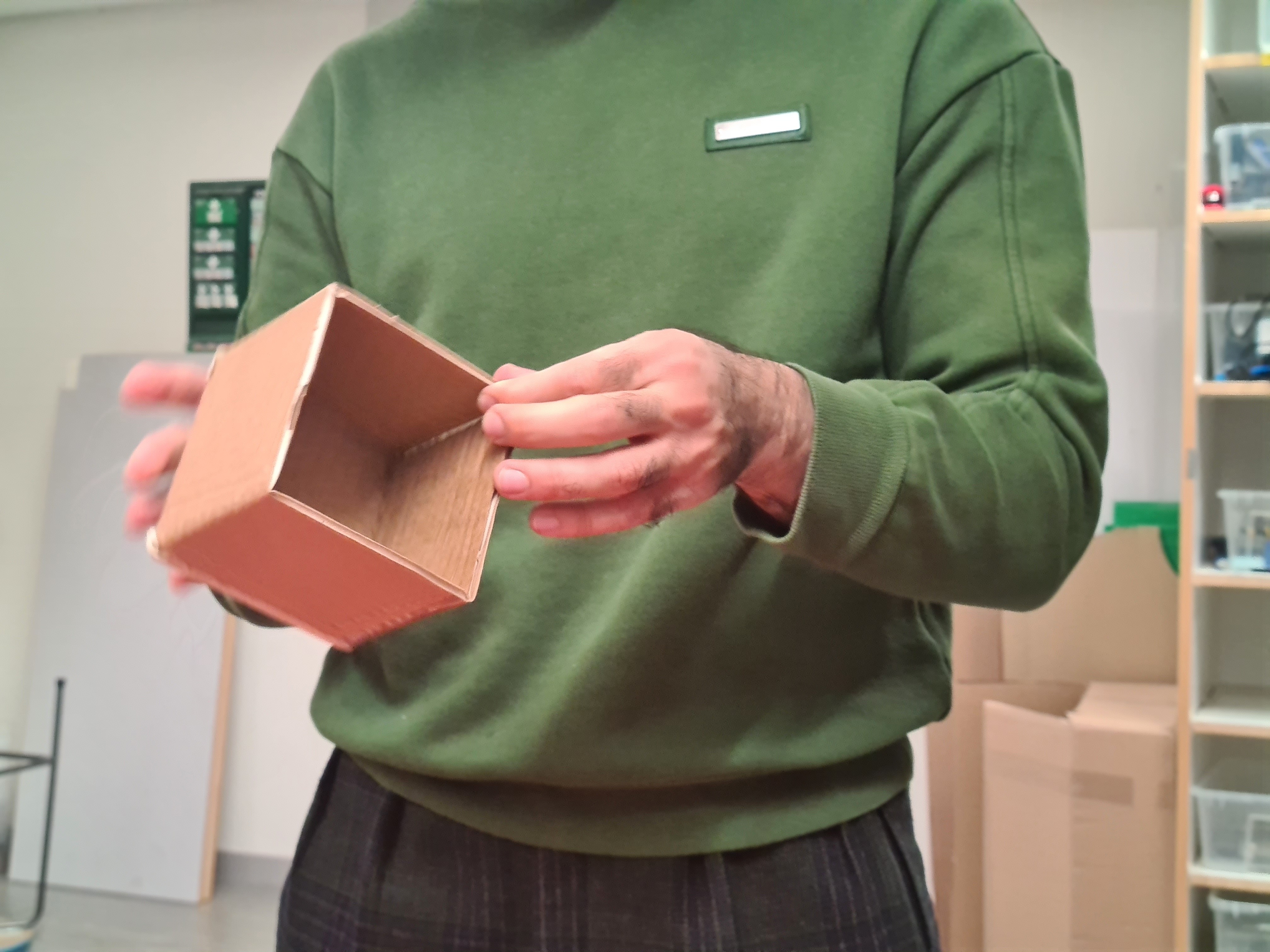
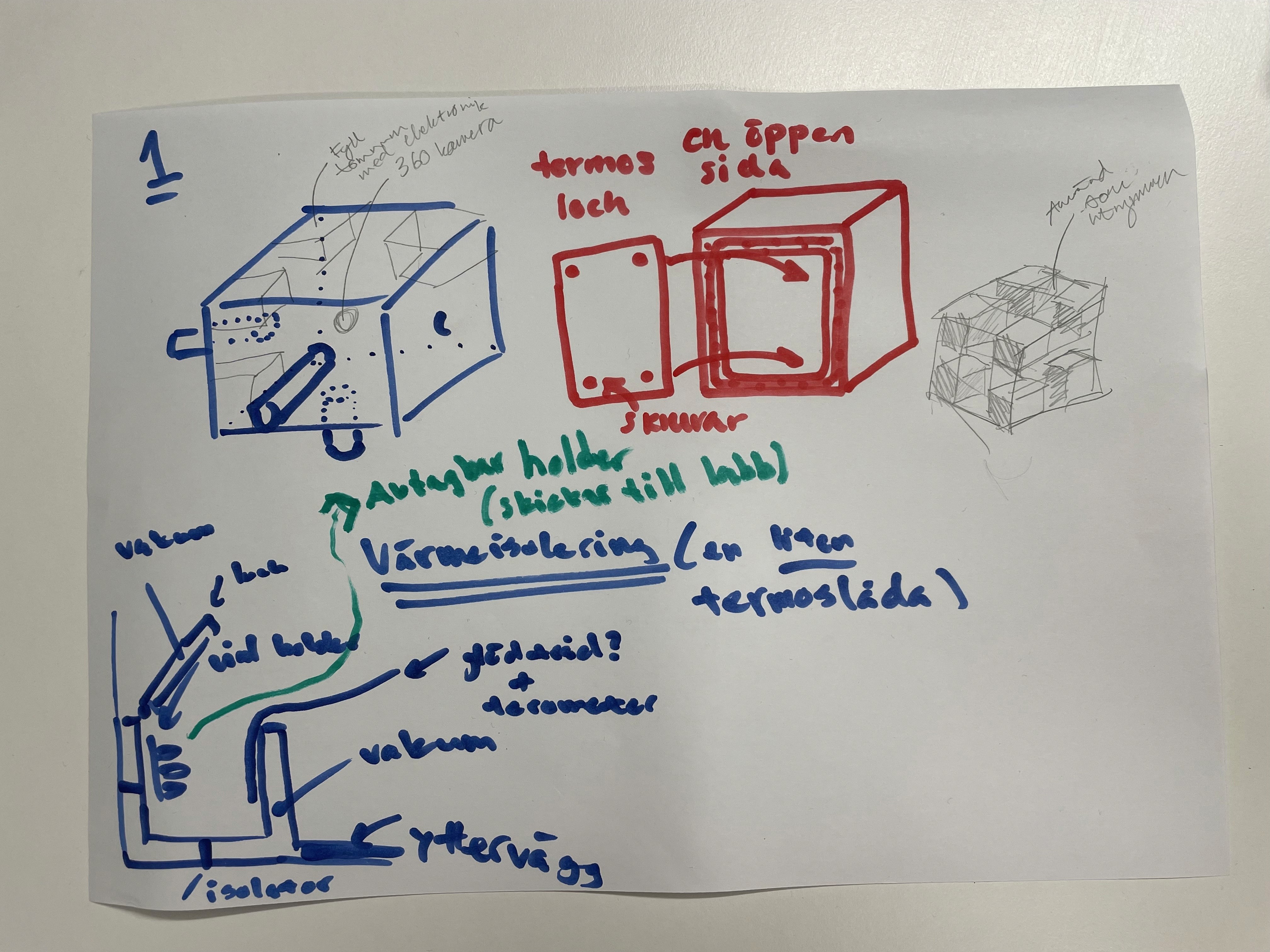
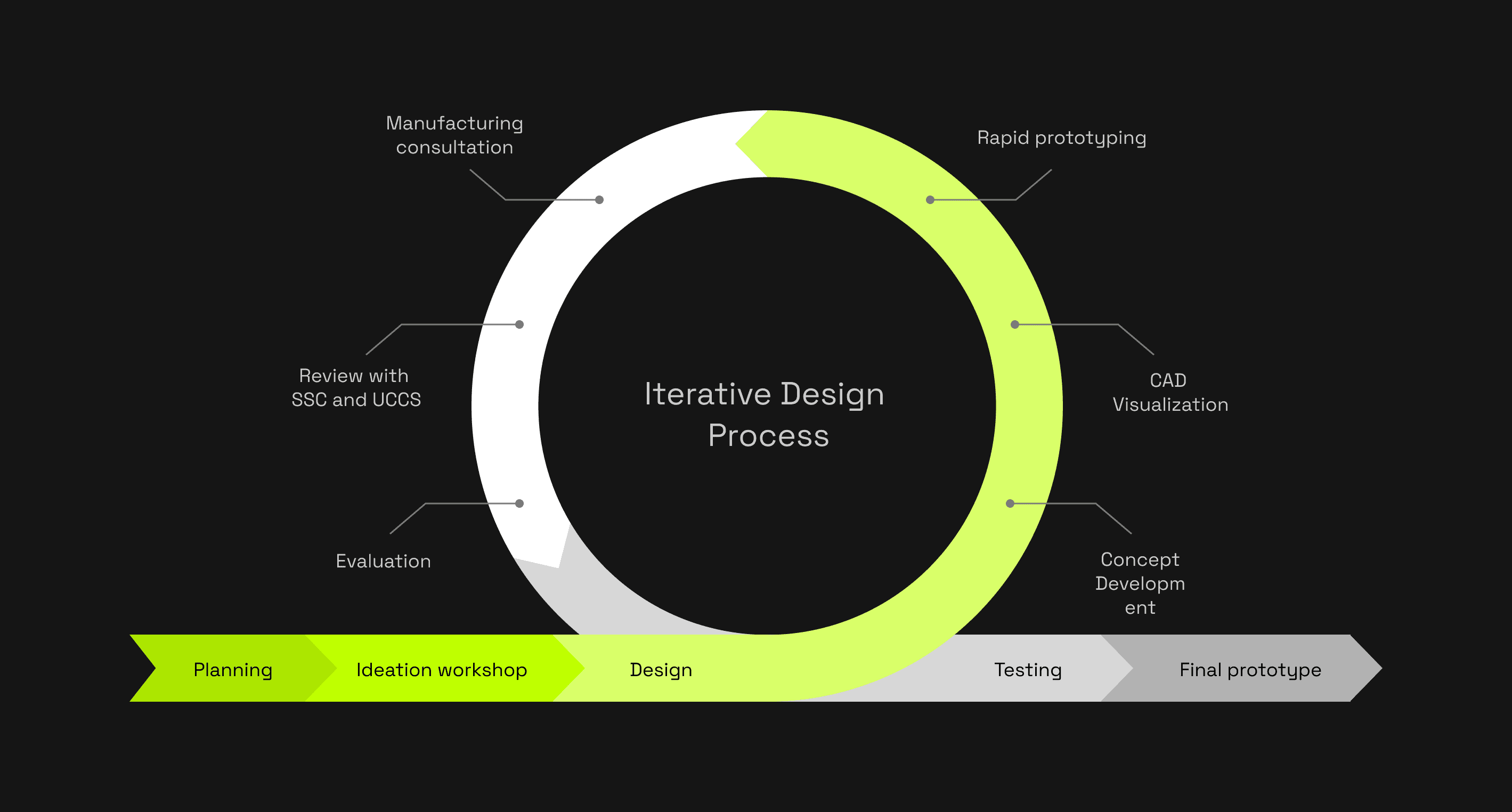
Our design process
Early design decisions
Early ideation established what direction our design had to take in order to enable us to adress all requirements. The initial concepts had to adress how the vials should be placed.
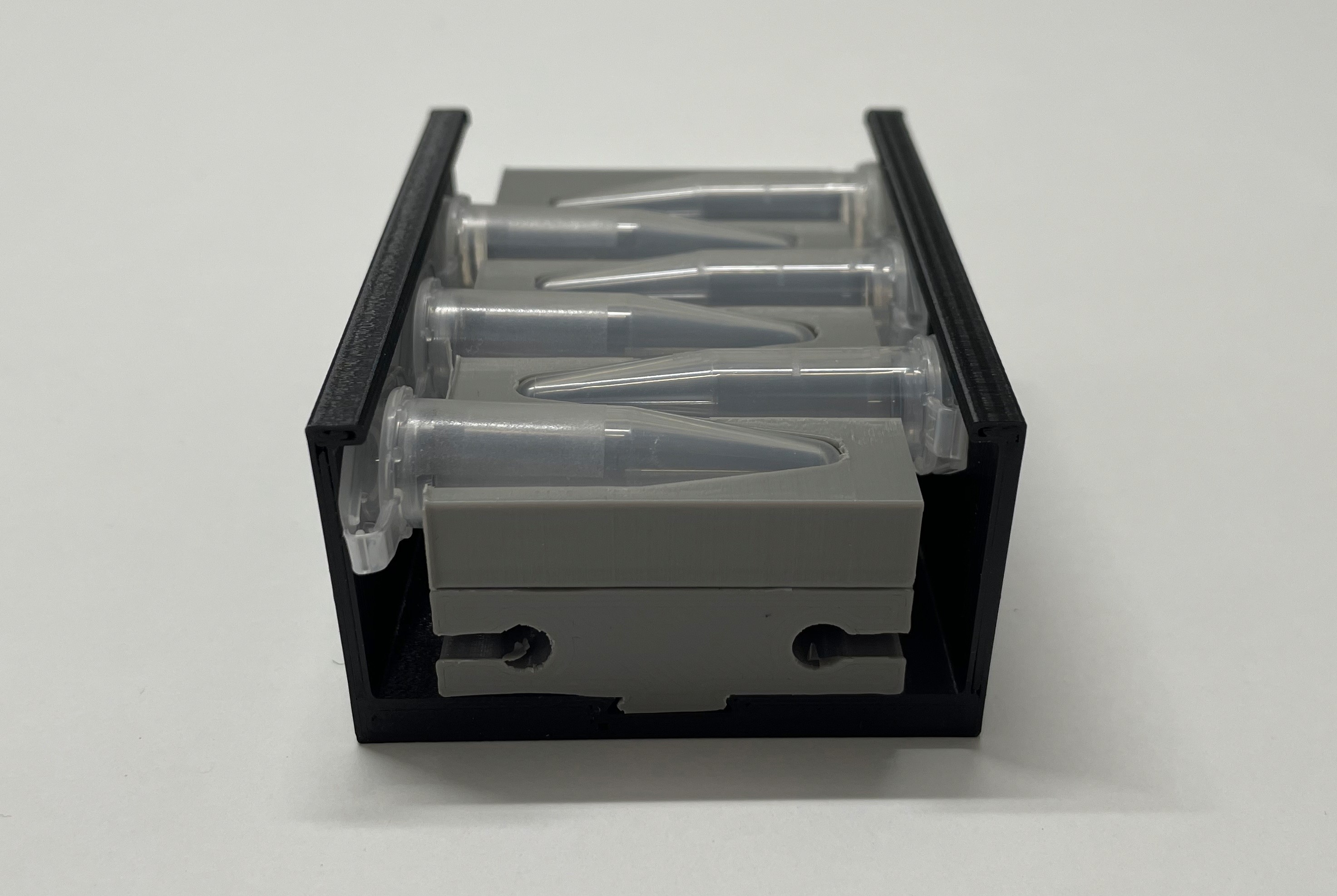
The design would primarly focus on housing 1.5 ml Eppendorf-tubes, as it's the standard container to use within the field
The tubes have to be placed horizontally and filmed from above, due to how the liquid behaves during thrust and microgravity
The compartment containing the vials need to be fully isolated from the outer shell of the box
Iteration process
Key design decisions
0
1
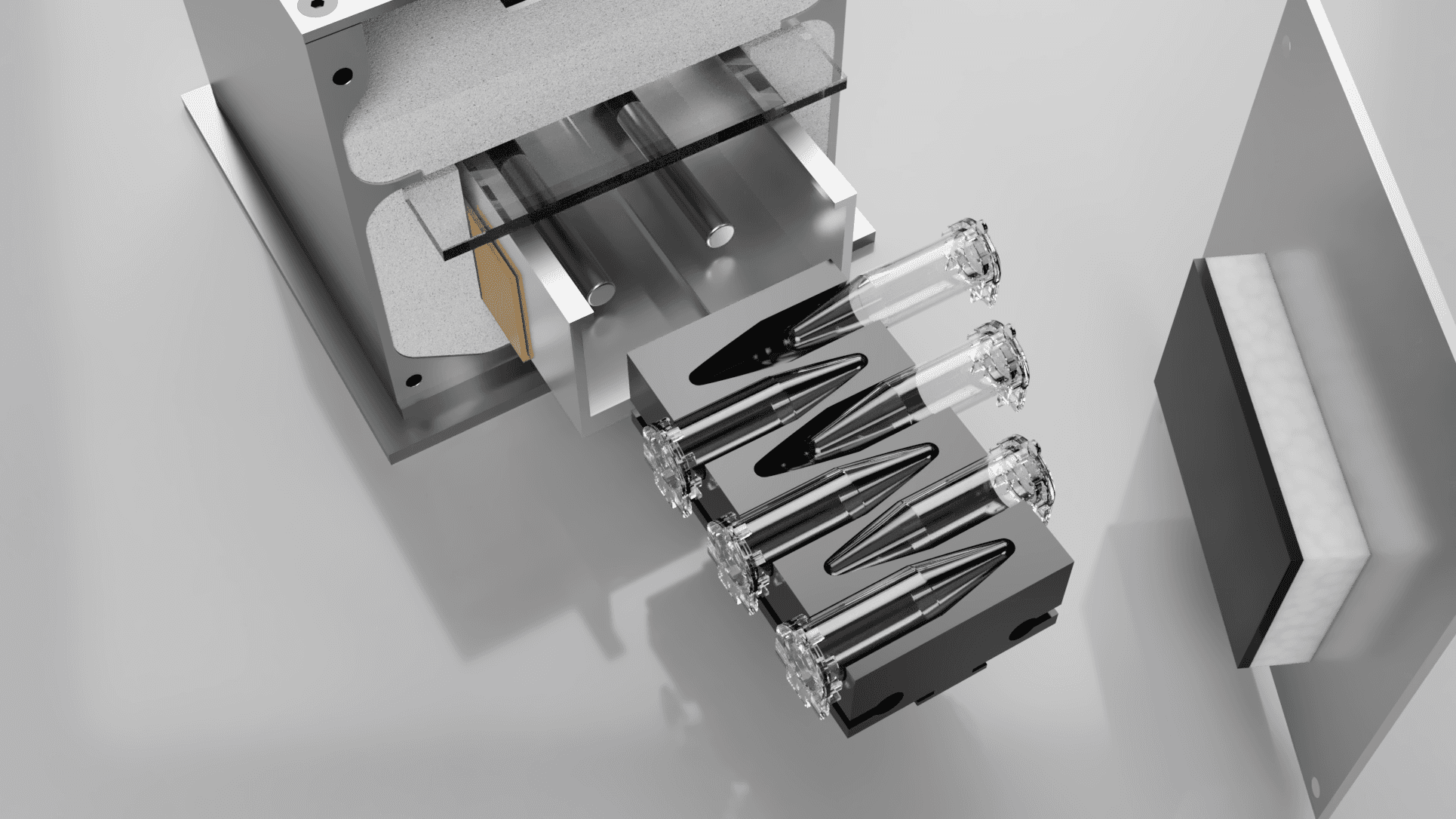
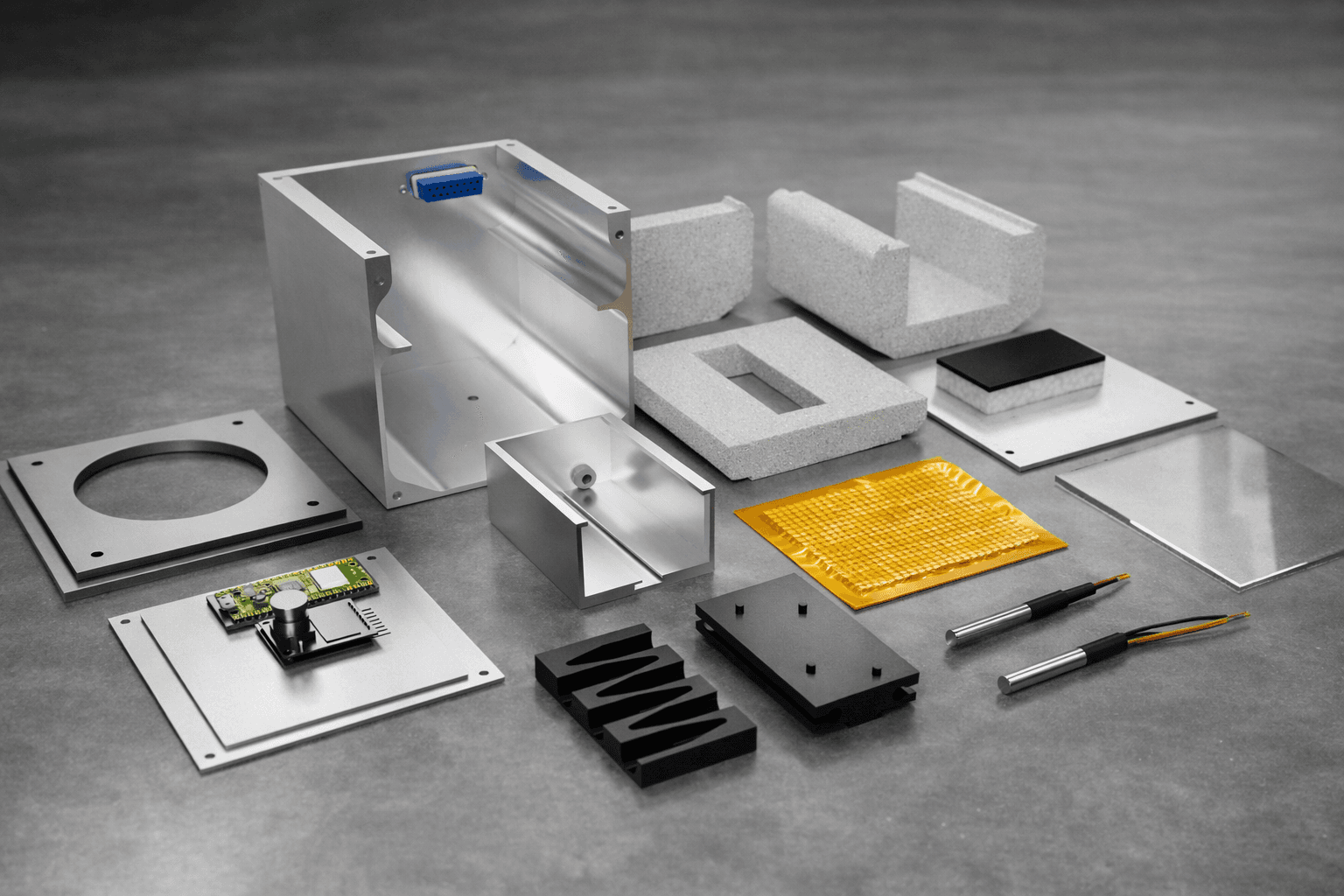
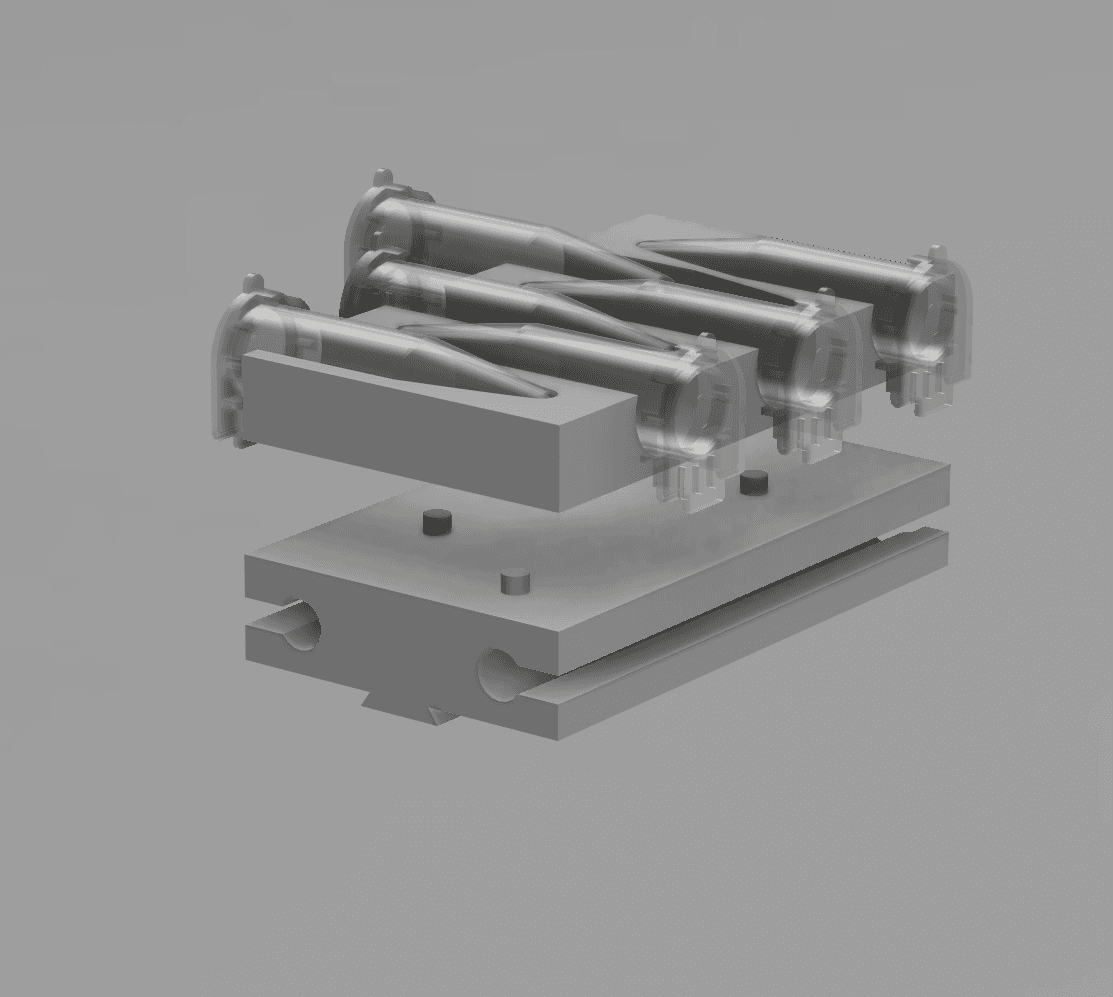
Separable vial holder
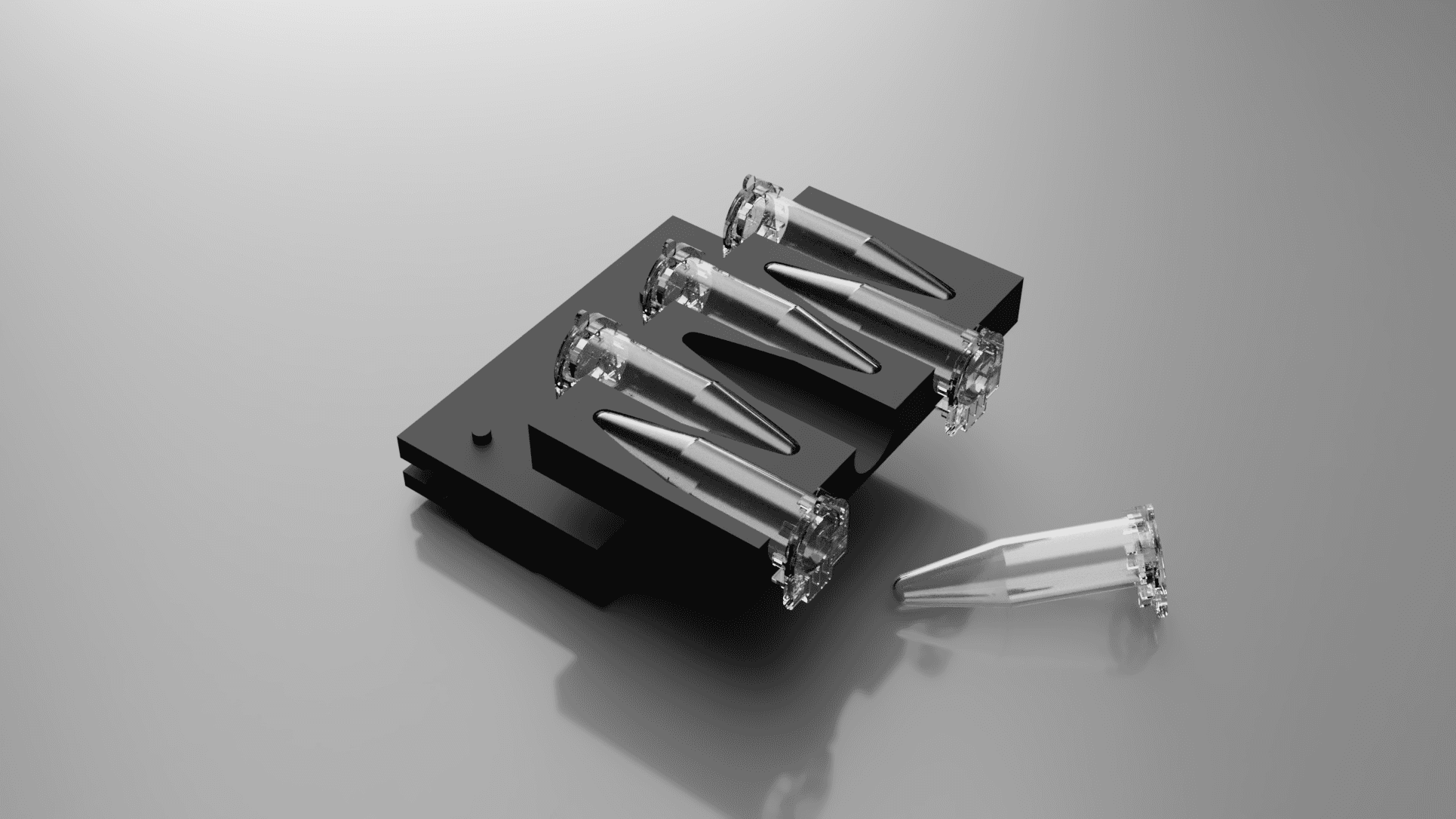
3D printed vial holder makes it possible to easily replace for different vial sizes, clean, and print new holders
0
2
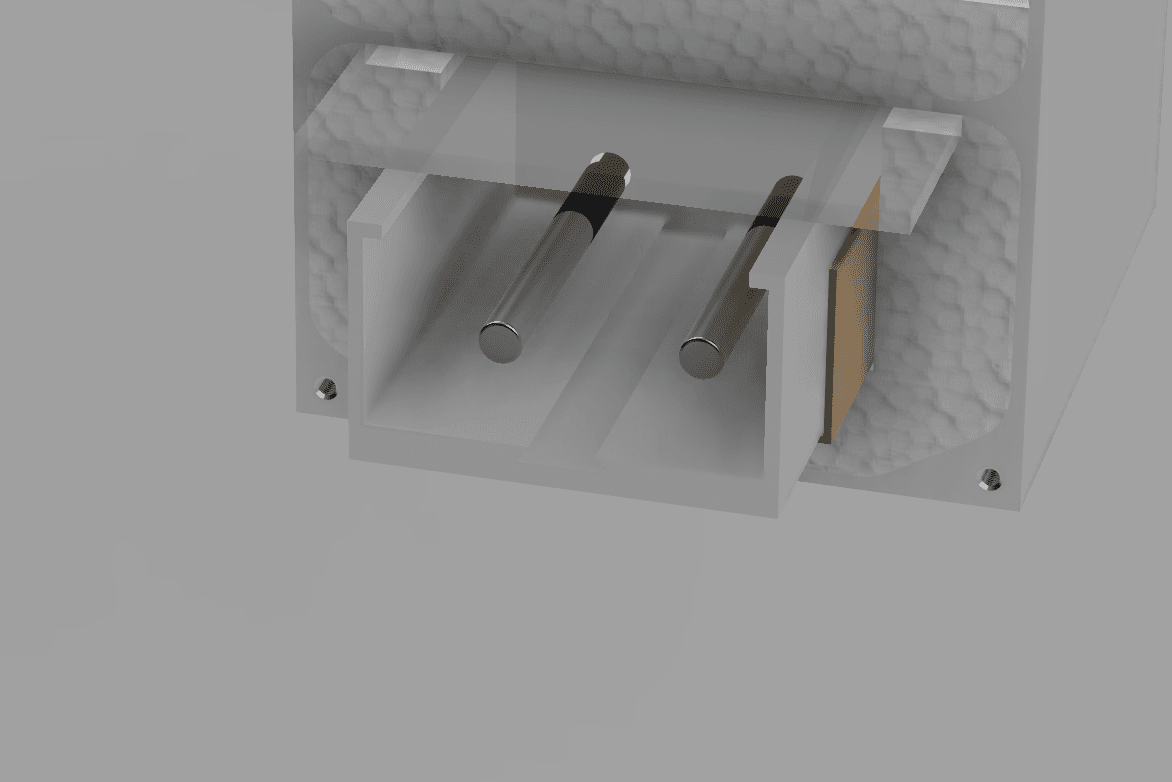
Dual temperature sensors
Functioning backup if one sensor is malfunctioning and detecting the temperature closest to the vials without obstructing view
0
3
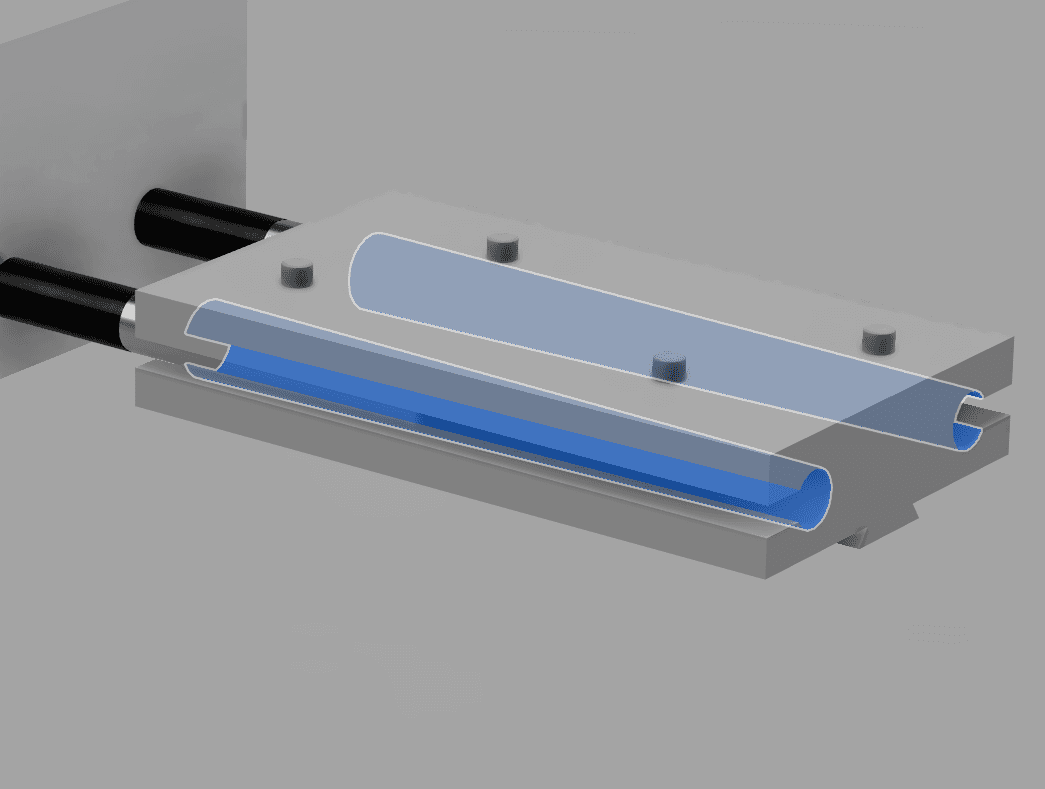
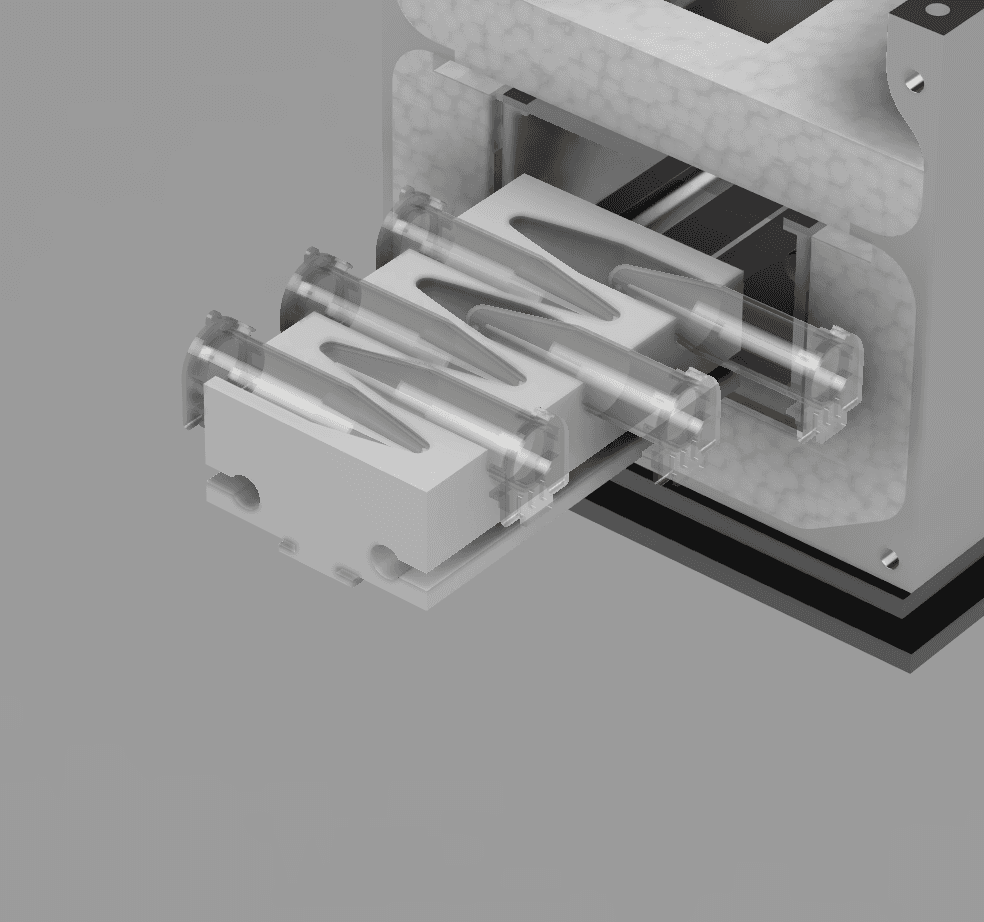
Only one way to insert
Cone shaped holes only let's the user insert the vials one way along the temperature sensors, ensuring the tightest fit and sturdiness
0
4
Single movable part
While all parts are removable for replacement and cleaning, the inner chamber only has one moveable part for easy insertion of prepared vials
Design process
Quick cycles of iteration
The set requirements were handled with an iterative design process, using rapid physical prototyping, exploring different solutions in fast cycles of evaluation and reiteration. I led initial ideation workshops, developed CAD visualizations, as well as lead the work towards interagrating the usability along with the technical requirements from the start.
Our design process
Early design decisions
Early ideation established what direction our design had to take in order to enable us to adress all requirements. The initial concepts had to adress how the vials should be placed.
The design would primarly focus on housing 1.5 ml Eppendorf-tubes, as it's the standard container to use within the field
The tubes have to be placed horizontally and filmed from above, due to how the liquid behaves during thrust and microgravity
The compartment containing the vials need to be fully isolated from the outer shell of the box
Iteration process
Key design decisions
0
1
Separable vial holder
3D printed vial holder makes it possible to easily replace for different vial sizes, clean, and print new holders
0
2
Dual temperature sensors
Functioning backup if one sensor is malfunctioning and detecting the temperature closest to the vials without obstructing view
0
3
Only one way to insert
Cone shaped holes only let's the user insert the vials one way along the temperature sensors, ensuring the tightest fit and sturdiness
0
4
Single movable part
While all parts are removable for replacement and cleaning, the inner chamber only has one moveable part for easy insertion of prepared vials
Final design
A final constructional proposition
The project resulted in a modular concept for a compact life science payload, while clarifying how usability, accessibility, and engineering constraints intersect in microgravity research tools.
The final design was handed over to project partners in Colorado for further development with the electronics and data management. It is planned to be manufactured and launched into orbit at the end of its development.
Project takeaways
Strict requirements don't have to mean a limited design space.
Formulating usability as a construction requirement ensured it maintained as much focus as the technical requirements
Creative ideation methods work very well in mechanical product development
Rapid physical prototyping through 3D printing and CAD visualizations helped tremendously both further ideation and with evaluating potential user experience
Final design
A final constructional proposition
The project resulted in a modular concept for a compact life science payload, while clarifying how usability, accessibility, and engineering constraints intersect in microgravity research tools.
The final design was handed over to project partners in Colorado for further development with the electronics and data management. It is planned to be manufactured and launched into orbit at the end of its development.
Project takeaways
Strict requirements don't have to mean a limited design space.
Formulating usability as a construction requirement ensured it maintained as much focus as the technical requirements
Creative ideation methods work very well in mechanical product development
Rapid physical prototyping through 3D printing and CAD visualizations helped tremendously both further ideation and with evaluating potential user experience
Previous project
Other projects
Next project